How to market your art the slow and sustainable way
When it comes to knowing how to market your art, many artists find that they spend more of their time and energy posting and shouting about the work than they do actually being creative.
The good news, is that creating the perfect marketing strategy for artists is all about simplifying and structuring your marketing activity in a more intentional, slow and sustainable way.
I’m sure you’ve read hundreds of blogs offering you the ‘secret formula’ or ‘must dos’ of marketing and come out the other side feeling more overwhelmed and even more confused as to what you should be doing. So today, I wanted to guide you through creating a marketing framework that allows you to:
Spend more time on your work and creating, then posting to Instagram or working on your website.
Allow marketing to feel easy, less personally extractive and supportive for your business.
Understand exactly where you can start to change and build a more sustainable marketing practice for your art.
Together, we will banish the artist marketing overwhelm and gain better control over how you shout about your work and reduce how much of your precious time and energy marketing your business takes up.
Why most generic marketing advice doesn’t work for small creative businesses
The number one thing a solo, creative business owner doesn’t have is a wealth of time and energy. They are a one-man band, they are the creator, the marketer, the accountant and the customer services team. Generic marketing advice very rarely takes this into consideration and it’s often wholly unsustainable for creatives.
Even advice from business influencers can be too intensive for those that want to spend more time creating, less time marketing and are not interested in being visible 24/7. And this is even more true for those that are just trying to keep a side-business thriving while also juggling full-time work and daily life.
If you take anything away from this guide, I’d like it to be:
It’s more important to have one marketing stream that can connect you with your target audience, then having 5-10 that gets you in front of all the wrong people. I’ve worked with companies in my agency job that have hundreds of thousands of followers and all those users do is look like a big pretty number on their Instagram profile.
Being consistent with your marketing doesn’t mean showing up as much as possible every single day, posting every day or making sure you’ve got a huge bank of content scheduled to make sure you don’t miss any visibility online. It’s more important to be consistent with messaging, than in actual physical ‘content’.
Being visible, including going viral, does not mean you’ll get loads of sales. This is a perspective that social media has carefully curated so you think it’s the only way to make your business successful. Over the last 12 years of working in marketing agencies, I’ve seen numerous clients come to us with websites that get tens of thousands of visits a month, but make next to nothing in sales.
With the Slow Marketing Club, I want to give you permission to push back against these ideas that end up taking precious time away from the work you actually want to be doing. Why waste your creativity editing a 30 second reel when you can pour that time into creating a new project and doing what you actually love?
Step 1: Get clear on who you’re creating art for
Before you even start to consider what type of marketing you want to be doing, you need to know exactly who you are talking to. This is often tricky for creatives and especially artists, because who connects and resonates with your creations is largely out of your control, but there are some hacks to help.
The starting point for generic marketing is demographics, how old your audience is, what their income stream is, whether they’re male, female or non-binary. But, if you are looking how to find your audience as an artist, then demographics won’t help you.
Instead, focus on interests.
What is it about your art that draws people in?
People will often gravitate towards subjects, stories or specific styles they love outside of the art world. For example, one of my favourite pieces of art is ‘The Nightmare’ by Henri Fuseli and when I thought about it, I’m often drawn to media and art that feels slightly unsettling, surreal and that speaks to some sort of psychological subject matter.

Image Source: The Nightmare by Henry Fuseli - 1781, Oil on Canvas - Wikipedia
Even though another piece of art I have, ‘The Others Are Waiting’ by SmallWhiteMonster is stylistically very different to Fuesli, there is still that element of unknown, a touch of the supernatural and a feeling liminal space.
Pinpointing what these interests are for your audience will be one of the best ways to start building your target audience and it will help you to decide what stories to tell through your marketing further down the line.
What does your style or subject matter say about your audience?
This might require you to make some sweeping generalisations, but that’s the best way to figure this out.
People buy art that they connect with, but it’s also an act of self-expression. When someone walks into their home and sees the artwork they’ve chosen, they want that work to speak about who they are, their values, their taste and their passions.
A great way to think about this, is to think about what conversations a patron may say about your work if it was hanging on the wall in their house.
Consider:
What they want the art to tell others about who they are and what they care about.
How they want the art to compliment or contrast with the design of their home or their own personal style.
How they want others to perceive them when they see the work in their home.
This will tell you a lot about why your target audience may choose your work over someone else’s.
I highly recommend spending some time researching into things like colour theory or the psychology around symbols and subjects to see what might make someone drawn to your art.
Even if those meanings aren’t what you, as the artist, put into the work. Art is all about personal interpretation so knowing general psychology around unconscious symbolism and colour could massively help you to better understand why someone might be pulled into your work.
Why is your audience buying artwork?
There are plenty of reasons why someone might buy art.
They might buy art for their home to compliment a new room makeover or to add to a curated aesthetic.
They might buy it as a sentimental gift for someone or even for themselves - think portraits.
They might buy art for their business premises, whether to liven up an office or to add to the design of a retail or hospitality space.
Even if someone buys something just because they like it, more often than not, they will already have some idea of where it will sit in their personal or commercial space.
Knowing why your audience buys art can help you figure out the best ways to market your work and can even help you decide where you need to be promoting your art.
For example, someone that sells food illustration prints to cafes or restaurants will market differently than someone who offers pet portraits. The illustrator may contact businesses directly to ask if they are interested in buying their work or would like to hire them for additional illustration projects.
The pet portrait artist however might market at in-person markets, through Instagram or via email marketing, to help them connect on a more personal level and be able to get the sentimentality of their work across to their audience.
Journal prompts for fleshing out your target audience:
What are the core themes of your work that attract your audience?
What values, interests or personal expression might these people see in your work?
Why are people buying artwork, especially art work like yours?
Step 2: Choose one to two places to show up
You do not have to be on all marketing platforms at the same time in order to have a successful marketing strategy. This might have been the case 5+ years ago, but these days authenticity, depth and intention are far more important than churning out hours of content.
This is especially true of artists, because you are not a machine. You are not mass producing print after print. It’s worth remembering that as an artist, you’re not just selling what you’ve created, you are also selling your time, your skill and your unique perspective of your subject matter.
For artists, in order to create a sustainable marketing strategy, choosing one to two platforms where you know your audience are is much more beneficial to your art business.
Where can you show up without it feeling like a second job?
There are a lot of marketing platforms that you can choose from, but the majority of people like to opt for online platforms because they are accessible, easy to manage in between projects and more often than not, are free to use.
Some of the marketing channels that can best serve artists are:
Instagram - a visual social media platform that is perfect for sharing new projects, WIPs, behind the scenes looks at your process and, if so inclined, a little look at you as a human being. It is a storytelling device that uses visuals to tell the story and the captions as footnotes. Did you know that on average, 60-66% of people don’t even read the captions on posts?
Facebook -Facebook is great if your work appeals to commercial customers or if you offer deeply personalised services such as commissions. In particular, Facebook groups can be a goldmine for finding people with interests that weave into your subject matter and they can also help you to find local markets to sell at.
Email Newsletters - something that many people shy away from because they never know what to write, but email marketing is one of the most successful marketing tools for selling work, especially if you have collectors and repeat buyers. I often think email marketing is very misunderstood, because the word ‘newsletter’ feels like it should be a storybook of news and updates. In actual fact, your newsletter could be as simple as saying “hey, I’ve just uploaded some new prints to my shop” or “I’ll be at these events this month, come and say hi!”.
A website or online marketplace - so many people, from artists to accountants, overcomplicate their website. The best websites are simple, clear and easy to navigate. For artists, all you really need is a gallery, an about page and a way to contact or buy from you. Your website is also a great way for people to find you through search and offers them a connection point they can use in their own timeframe.
Offline marketing still matters
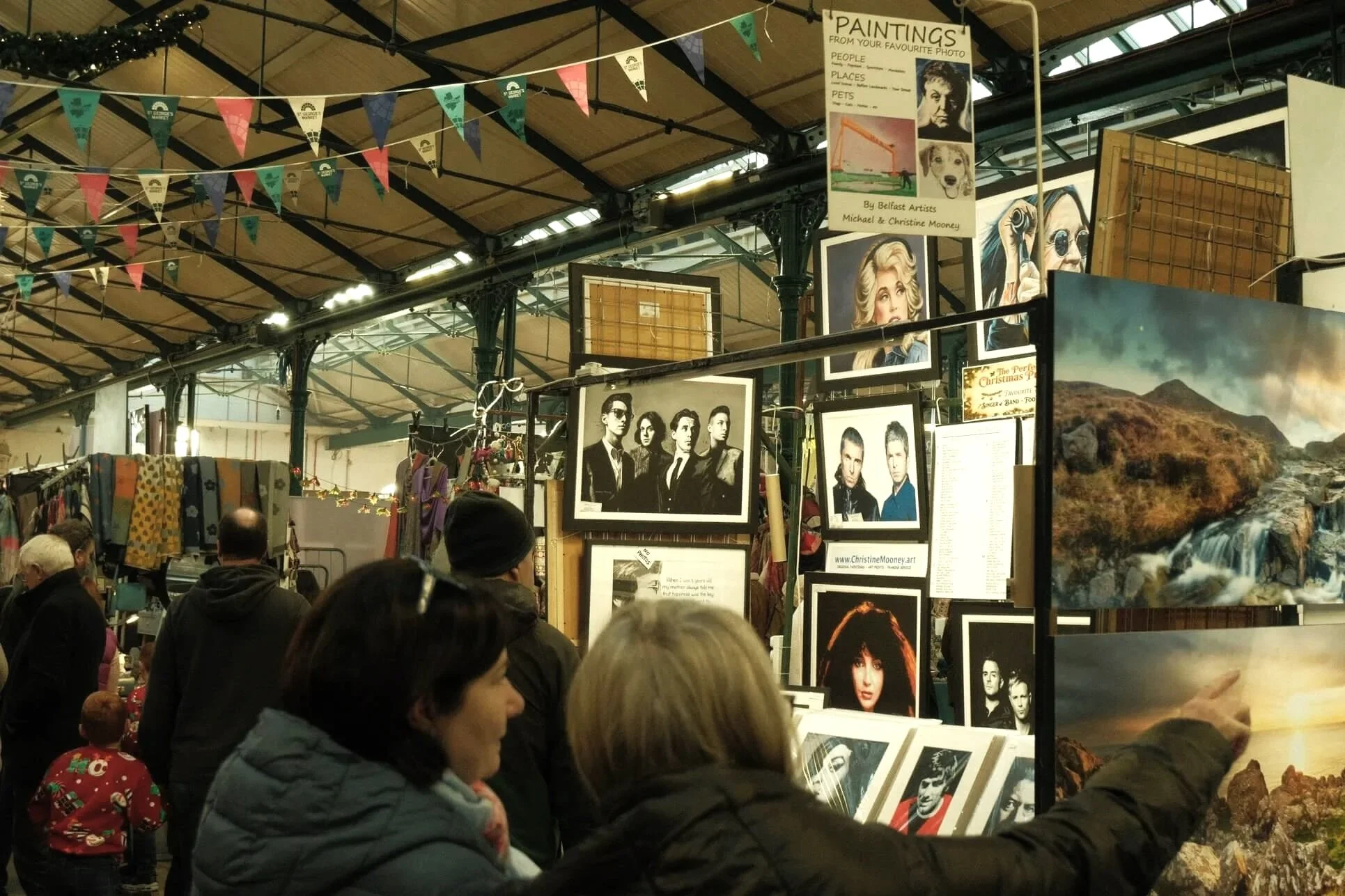
So much weight is put into online marketing because of how easy it is to access, but in-person marketing can often be some of the most impactful. Things like leaflets and flyers in your local coffee shop or independent shop can work wonders.
If you do markets, the in-person conversation about your work might not generate a sale there and then, but it is more likely to lead to a sale further down the road. Plus, if you combine this conversation with getting the person to sign-up to your mailing list while you have them, you’ve got another way to stay in touch with them.
Something I’ve learned, especially since we all emerged from the pandemic, is that people crave human connection more now than ever before. If you can create those connection points, there is a magic that happens when people come into contact with your work in a market or gallery environment. Something that can be tricky to reproduce using online marketing tools.
Choosing the right marketing platforms
I wrote a more holistic blog all about choosing the right marketing platforms here, but essentially, you want to choose platforms that feel the most natural to you. If it feels like a strain to show up on a platform, or it feels like it drains your creativity or joy in your work, then it’s not worth it.
Your marketing needs to fit around your work, not encroach on it.
For now, ignore what you think performs the best and think about where you feel most excited to share your work. Write down:
What platform feels like a natural place to share what you’re excited about in your work and what feels the least extractive for you personally.
What platform will allow you to tell the story of your work, inspiration and processes in a way that feels easy and allows you to feel connected to those who might be interested in buying your work.
For me right now, I find Substack helps me to not only express myself more creatively while marketing The Slow Marketing Club, but also feels the easiest because I want to show up on there to share what I’ve been working on.
It’s all well and good someone telling you what social media channels are best for selling your art, but if it feels like a chore to use those channels, then your audience will most likely be able to feel that strain and reluctance when you show up there.
If you market in a way that feels energised and excited, that will seep into how your audience perceives you and your work. It creates a stronger connection, which in turn, helps to improve your chances of making a sale.
Step 3: Creating a simple marketing routine for artists
So much of the advice shared on places like Instagram is about consistency and finding ways to be constantly visible. Even the ‘batch create X amount of content in X amount of time’ advice revolves around the need to do as much as possible in as little time as possible. Something that might make sense on paper, but for many is unsustainable.
Consistency is a buzz word that often makes you feel like you have the responsibility to keep showing up even if it doesn’t feel good. Instead, it’s best to create a sustainable rhythm to your marketing, rather than an unsustainable posting schedule.
For example, I only write long blogs like this one once a month. I only write The Slow Marketing Club newsletter once every other week and I now only post on social media when I feel like I genuinely have something of substance to share.
Doing something that you feel energised to do for 20-30 minutes each week or even every other week, will be 100x more valuable to your audience and your art business than showing up every day with content that is being posted for the sake of posting.
Examples of a slower, more sustainable way to market your art:
A monthly studio update - show your audience via email or social post what you’ve been working on recently. People respond best to authenticity so you don’t have to make everything picture perfect, be honest and show the ups and downs of the creative process.
A look at your personal inspiration - if there’s a story, gallery show, book, song or aspect of nature that has inspired a project you are working on, share it. You can do it in the form of pictures and post to Instagram, or write a blog or longer, story-time style newsletter.
Share your WIPs - a work in progress is always interesting to art lovers because we love to see the process just as much as the finished article. When someone buys your work, they’re also buying your unique skill, so showing how you bring something to life is a great way of letting people into the intimate story of the work itself.
These types of marketing content can’t be done in bulk, they can’t be produced en-mass because that’s not a true reflection of how long creating work takes. And that’s ok. People would much rather you post once a week with a really in-depth piece of content that they can fully emerge themselves and engage with, then a quick post thrown onto the feed that offers them nothing of substance.
The culture of instant gratification has created this idea that we need to be putting in 110% 24/7. This means we can often feel guilty or like we’re neglecting our businesses if we’re not shouting about it all the time.
This is especially true with social media. Back in the day, when social feeds were not hounded by ads, suggested posts and accounts and were in chronological order based on time posted, posting all the time made sense. Now though, with algorithms and personalisations and a whole load of noise from accounts people don’t even follow, it doesn’t matter if you post everyday.
A quick example of how little it matters is my old tarot account, which I haven’t posted to in about 4 months now. And yet, I still get likes, comments, follows and notifications on posts that I posted 2-3 even 5 years ago. If you post an in-depth post that gives people something to really connect and engage with, that post will do more for you than 100 flippant posts ever will.
To help you think about what marketing routine would best suit you and your business, have a think about the following prompts:
What stories can you tell about your work or your creative process that would give potential buyers an inside look at the work they may want to buy?
What medium is the best way to tell those stories and how could you make sure to enjoy the process of telling those stories?
How much time do you want and feel able to spend on your marketing each week or month?
Step 4: Make it easy for people to buy your work
All the marketing in the world is worthless if people can’t figure out how to buy from you.
Don’t overcomplicate things, don’t let your ego get in the way, be open, honest and transparent with your prices where possible and make purchasing feel like the easiest thing in the world.
Don’t be afraid to say ‘hey, you can buy this here’. You’re a business, not a free online gallery (unless that’s what you want to be). People follow an artist knowing that you are selling art, so never feel bad about telling people how they can buy from you, it’s what they’re there for.
The best ways to sell your art as a solo, independent artist or side-hustler are:
An online shop, whether this is part of your website or on a marketplace like Etsy. Especially if you sell prints, people want to be able to find the work they like, click a button and have it shipped to their home with no fuss.
An online form for commissions that allow people to put their personal details in and asks them the information you need to know in order to give them a quick and accurate quote for the work. It’s also a good idea to put this form on a dedicated website page that details the process of ordering, creating and delivering commissions.
At markets and galleries. If you exclusively sell at markets or through galleries, make it crystal clear on all of your marketing materials and make sure to include addresses and locations where people can go to buy your work or the people/places they need to contact in order to make a purchase.
Many artists worry about pricing their artwork and drawing attention to it, but being clear about your pricing is one of the best ways to give your work the best chance at selling.
Think about how many times you’ve seen something in a shop or at a market and it’s not had a price on it. Did you feel compelled to get a price and make a purchase, or did the hassle of having to speak to a potential pushy sales person, only to find you couldn’t afford it anyway, put you off?
If you work through commissions, give examples of previous commissions you’ve done and how much they were priced at. Be clear about anything that might bump up the price such as choosing a more premium print paper or using materials that might increase your costs.
My number one tip for talking about the price of your work is to be firm and clear. If someone loves your work they will find a way to pay for it and if you can be clear about how they can make that payment and take home that work, you’ve got a winner on your hands.
Quick exercise: Audit your sales channels
Take some time to put yourself in the shoes of your potential customer and try and buy from yourself or get in touch within 2 clicks or less.
This means making sure that the journey from finding you online or from getting a business card, a leaflet or having a conversation, it should only take 1-2 steps in order to be able to buy or get in touch with you.
If you find it’s a bit of a labyrinth in order to become a paying customer or interested client, then think about how you could streamline the process. What steps are in the way that aren’t necessary?
Another thing to think about for websites specifically, is how much scrolling is needed in order to find a form, product or key sales information?
Creating a one-page marketing plan for your art business
Below you’ll find a one-page Google Doc template that you can copy and fill out. This should help give you the basic framework of your marketing moving forward, helping you to create a more simple, slow and authentic marketing plan.
This template is split into the steps we’ve worked through in this guide, so you can even have it open and go back to the steps you want to dive into in more detail.
In section 1, you have space to work into your target audience a little more, making sure you know exactly who you’re talking to and what they might want to hear or see from you.
In section 2, you can get clear about how and where you want to show up in your marketing and build a marketing routine that fits around your work and doesn’t ask too much from you.
In section 3, you’ll have space to work on that sales audit, making sure that you’ve made it as simple and easy as possible for people to become paying patrons of your art.
This document is meant to be a living document, meaning that at any point you can rewrite, adjust and revisit any of the sections to help keep your marketing aligned. You don’t have to stick to any of it if you feel like things have shifted or like it’s no longer supporting you to do the work you want to do.
To access the Google Doc, click the button which will take you to the doc, from there go to File > Download and download the template to your own device, or if you’re logged into your Google account, make a copy to use in your own Google Docs.
Start slow and work your way up
By stripping your marketing right back, you should be able to see how you can build a marketing plan for your art business that doesn’t feel like it sucks all your creativity into a content creation void. Hopefully you’ll be able to see a clear path from getting in front of your audience, all the way to easily turning them into paying customers.
If marketing your business takes the fun, joy, creativity and motivation out of working on your creative projects, it’s not a strategy that will be successful or be sustainable. Start slowly with step 1 and build from there, there’s no rush to have it all figured out right now.
And if you’re looking for regular inspiration around building a slower, more intentional marketing plan, then make sure to take a look at The Slow Marketing Club newsletter.
Speak Soon,
Cat x
Author Bio:
Hi, my name is Cat Crawford, a marketing professional based in the North-West of England. I have over a decade of marketing experience working within leading Manchester marketing agencies and have even worked in creative agencies across the world. Now I’m using my expertise to help independent artists trying to do it all, to market their work and support them to build a career they love.
